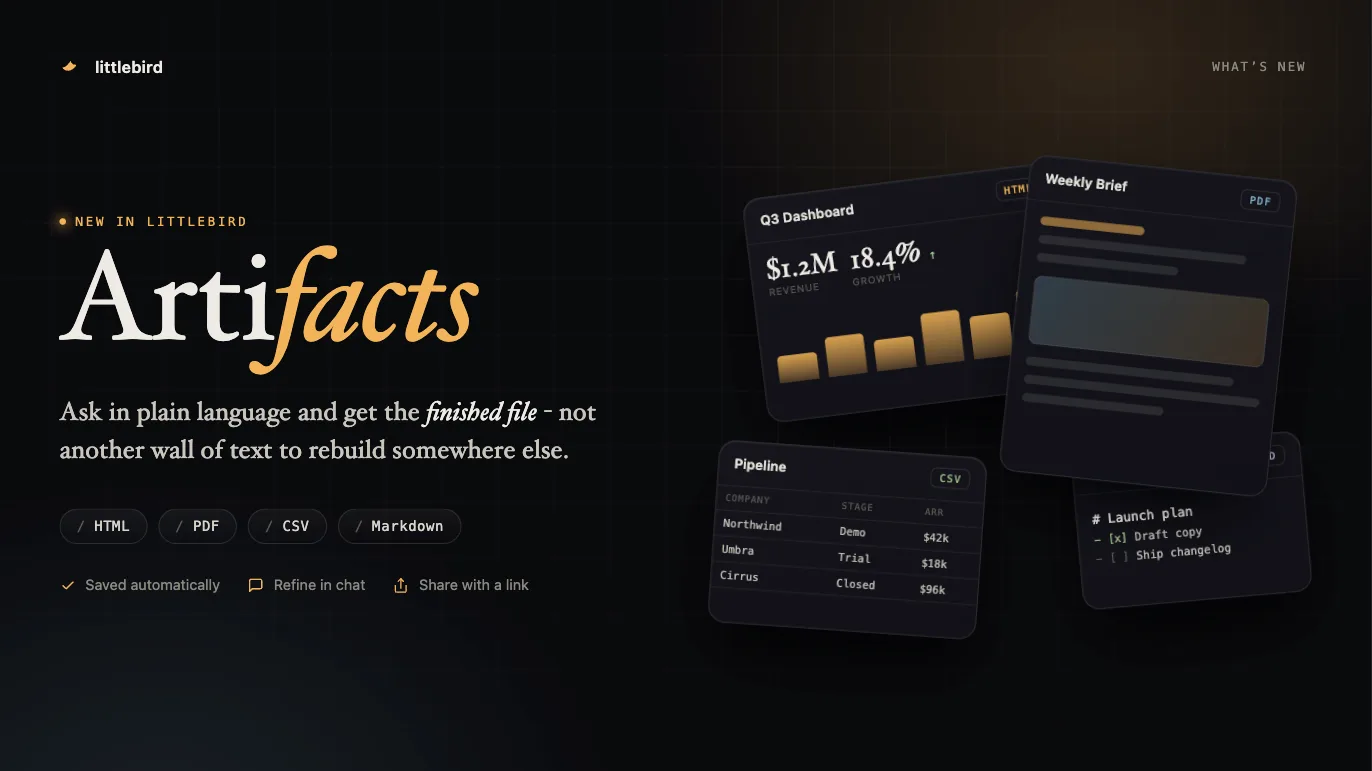
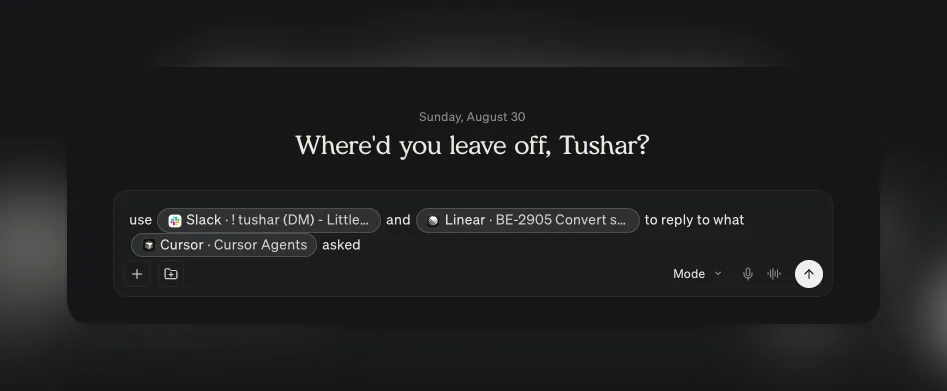
You can now ask Littlebird for a webpage, a PDF, a CSV, or a Markdown document and it will build the file. That is an
Artifact. Try this prompt -
An HTML Artifact can also be published as a web page and shared with others.
You can also use a Routine build a new one every run. For example: “Create a PDF summary of the week’s customer
feedback every week”. You’ll receive a new PDF in Littlebird and by email every Friday.
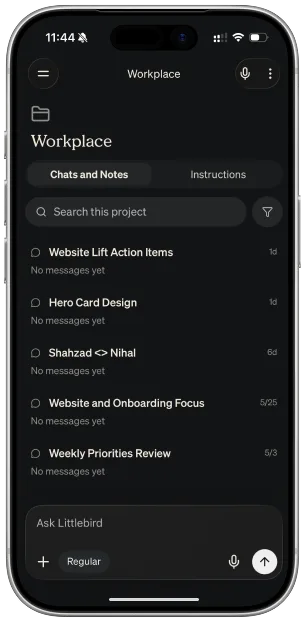
If you’re a part of team, you can now have shared projects, such that every chat and note part of the project is shared with others.
Open a project, choose Share, and give each person or team Member or Admin access. You can share a project with the whole team or specific people within a team.
When Littlebird works through several steps, the expanded list of steps is easier to read. It runs down the message
column instead of scrolling inside a short box, and a long step title stays on one line with the full text on hover.
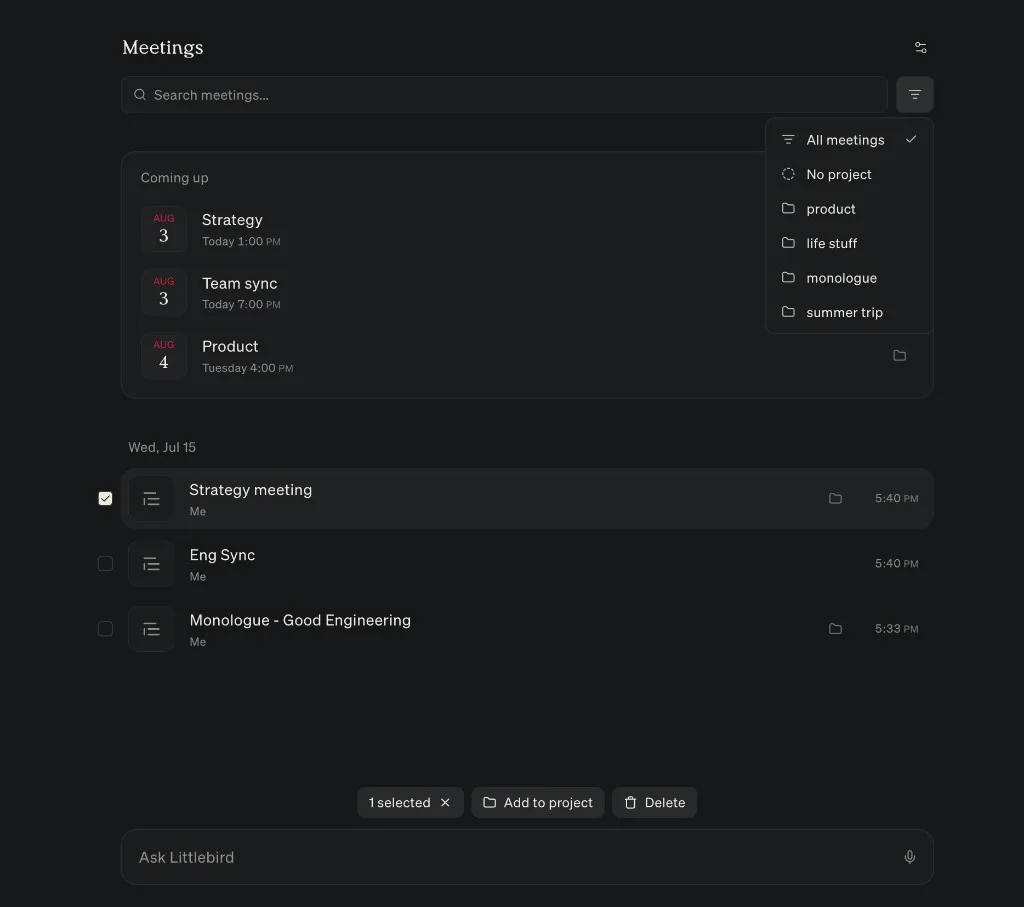
Meeting notes sit under the day the meeting happened rather than the day the note was created, and a meeting already
listed in Coming up no longer appears twice on your phone.
Littlebird tells you before your monthly usage runs out: a notice above the composer at 70% and 90%, the percentage
spent and its reset date on the Usage menu, and each Routine’s share of the cycle on its configure panel.
Fixed the share menu for an artifact, a chat, or a meeting note closing itself as it opened, opening the item
underneath when you chose team or public, and leaving both selected when you switched between them.
Fixed the menu on a Routine report being unreachable when you opened the report from a notification, which put Read
aloud, Copy content, and Start chat out of reach.
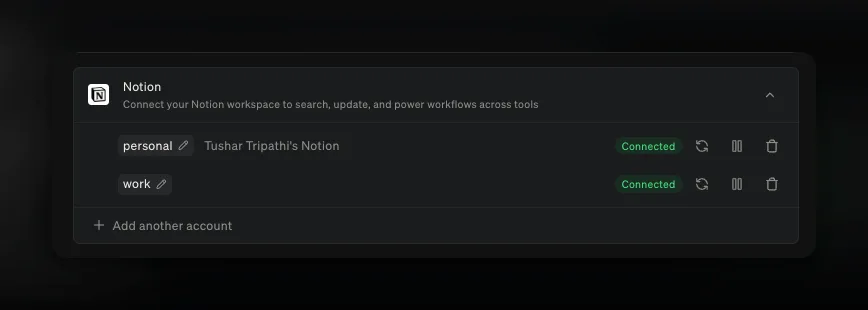
You can connect several accounts of the same integration, so your work and your personal life do
not have to share one connection. Add two Gmail inboxes, both of your calendars, a second Slack workspace, or two Notion
or Linear workspaces, then ask for the one you mean: “check my work inbox for anything from the Acme team”.
Open Settings → Integrations, choose an integration, and select Add another account. Littlebird names each one
from the account you signed in with — the Notion workspace, the Slack team, the email address — and uses that name when
it decides where a request should go. Rename any of them with the pencil beside the name. Each account keeps its own
controls, so you can pause, remove, or reconnect one without touching the others.
Type @ in the composer and choose a window, and Littlebird reads it for that message. The menu lists what you have
open with each window’s title beside the app, so you are handing over the tab or the file you mean rather than the app in
general.
It is at its best when the thing you need help with is already in front of you. Tag your browser on a long article and
ask whether it changes anything for your plan. Tag your editor and ask for the pull request description. Tag a
spreadsheet and ask for three lines you can say out loud on a call. Tag Slack and ask for a reply that pushes the date a
week without sounding like it.
Name two and Littlebird holds them side by side — your design file and the spec it came from, and the question of which
one is now out of date.
Apps you have excluded from context sit in their own Attach an excluded app section. A mention
is a one-off share rather than a standing permission, so you can hand over one window once without letting Littlebird
watch that app at all. Hover takes @ too. Available on macOS.
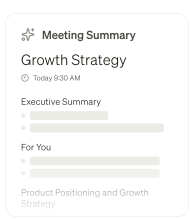
A meeting summary is written for you. It carries a private For you section and phrasing that
only makes sense to whoever took the notes, so forwarding one has never been a good idea.
Send to attendees rewrites it for other readers. Littlebird drops your private section, recasts the summary for a
group, and opens an email draft addressed to the other people on the invite.
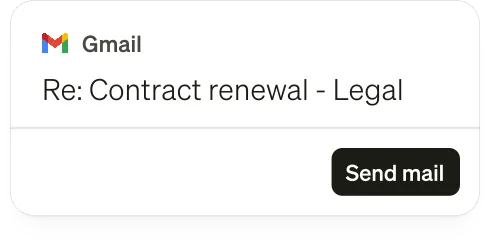
Nothing sends on its own. Read the draft, change what you want, and send it from your own connected
Gmail account, so replies come back to you rather than to Littlebird.
Improved how Littlebird uses your connected integrations, so it checks your email, calendar, Slack, or ticket
tracker for an answer instead of relying on what happens to be on your screen.
Everything Littlebird builds for you gathers on the Artifacts page. Search by the artifact’s name or by the chat it
came from, filter by type, switch between a grid and a list, and open, refine, download, share, or delete any of
them from its menu.
A markdown artifact has a copy button in its side panel that puts the whole document on your clipboard, and the
Artifacts page notes that building one can use more of your monthly usage than an ordinary chat.
Settings has a search box that finds a setting across every section and jumps to the exact row, typos included. It
reaches your connected accounts, MCP servers, keyboard shortcuts, and archived chats, and individual settings turn
up in the command bar.
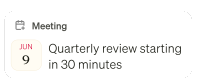
Meeting notifications are more compact, and the logo on one is the app you are actually about to join — Zoom, Teams,
or Meet — rather than a guess from the event name.
Search finds what your Routines produced. A matching run appears under a Routines heading and opens the Routine
rather than a chat, and Routine runs stay out of your chat list.
Invite links are shorter, you can copy the link itself rather than only the code, and the share text is written for
the place you are posting it. Let Littlebird write it opens a chat that drafts the invite from how you actually
use Littlebird.
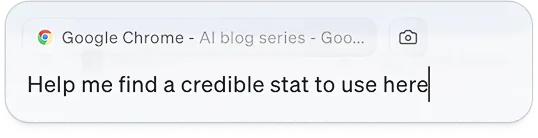
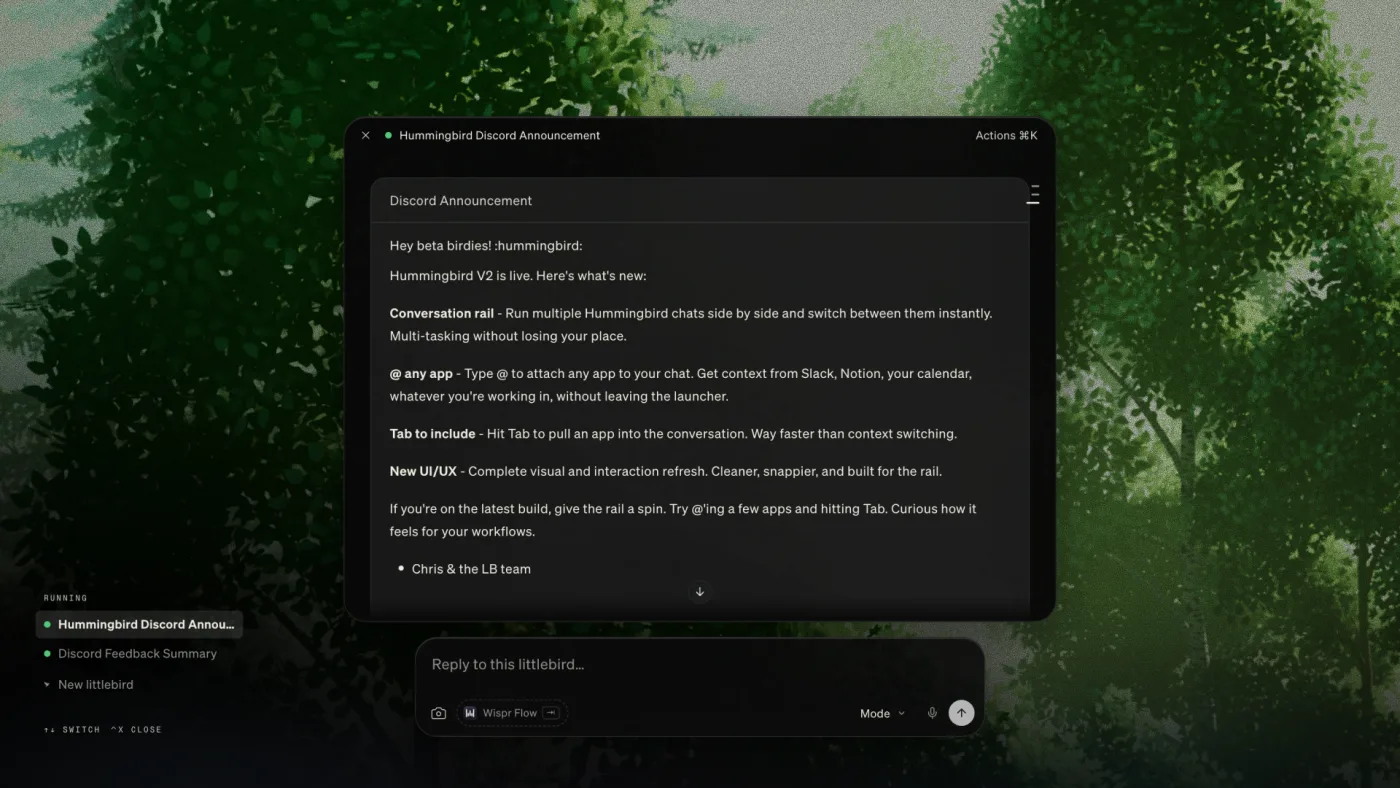
Hover opens as overlay, so you can ask for help without leaving the work behind. It has situational awareness about your windows, ongoing meetings and everything else Littlebird knows.
We’ve redesigned the experience to run multiple conversations simultaneously with a new conversation rail. You can also type @ to bring in another window, and move between chats with keyboard shortcuts without ever opening the Littlebird app. Ask about the email, the spreadsheet, or the page in front of you without attaching it first. You can take a screenshot from the overlay and auto attach.
Routine emails carry the whole report now. When a Routine built its report as a document, the email
announced it without including it, so there was nothing to read until you opened the app. The report is now in the body
of the email, and any PDF it produced comes attached. You can also reply to the email to continue the conversation without opening the app.
When Littlebird finishes meeting prep or a meeting summary, it emails you the result. Turn either off in Settings
→ Meetings, or use the unsubscribe link in the email.
The floating widget has a composer while a meeting is recording, so you can ask about it without leaving the call.
The answer lands in that meeting’s chat.
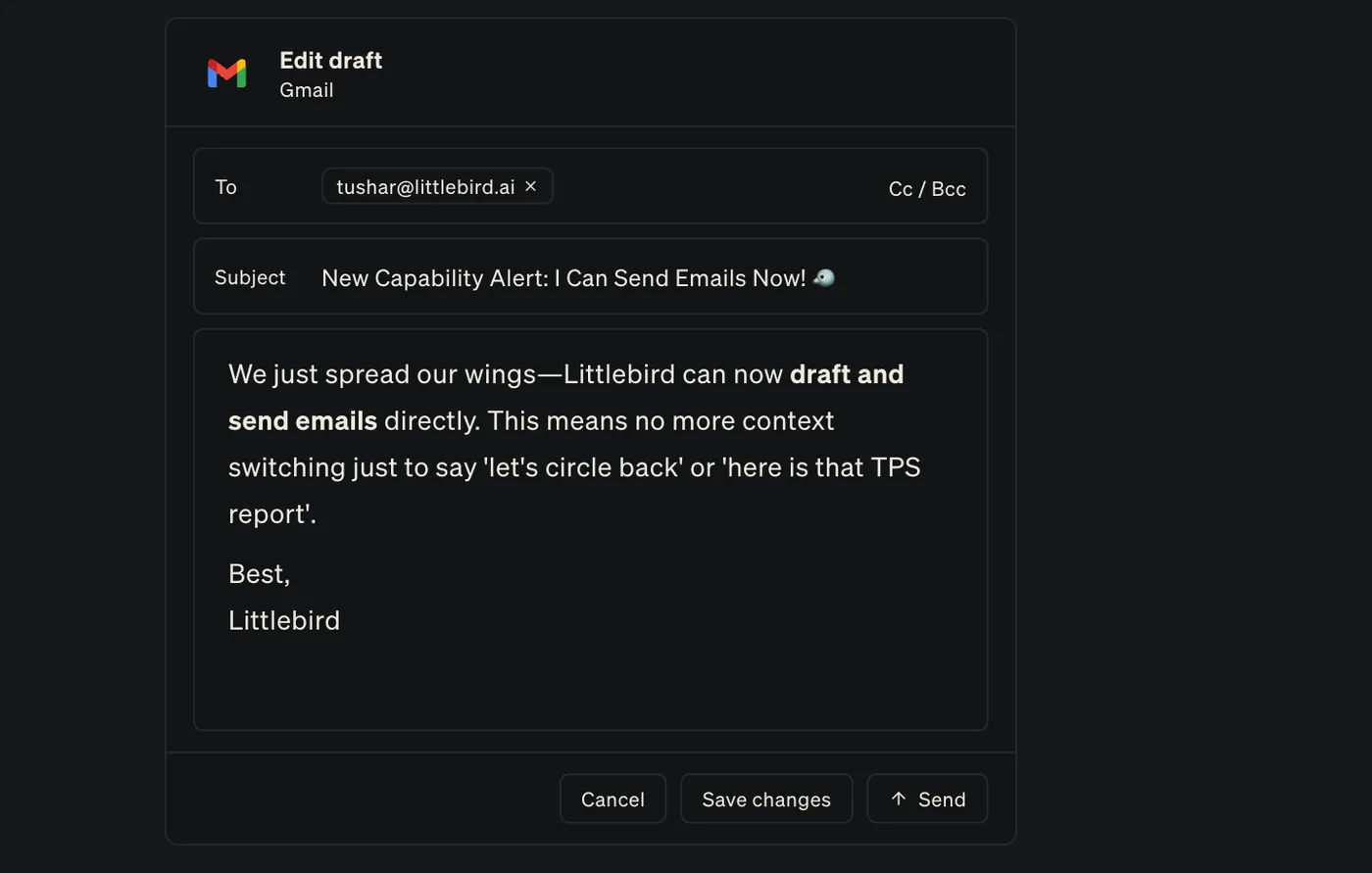
The email draft card in Chat has been redesigned, and several things that went wrong in it are fixed: keyboard focus
could get stuck in the recipient fields, collapsing Cc and Bcc hid recipients that were still sent, and Cancel threw
away your edits without saying so.
One toggle collapses or expands every integration at once, and a collapsed integration summarizes its accounts — “2
Connected”, “1 Expired” — instead of showing nothing.
Chats with a lot of images and generated files in them stay fast — files you have viewed no longer accumulate in
memory, and attachments load when you open them rather than when you scroll past.
A Routine report used to land in your inbox and stop there. Now you can answer it. Reply to the email and Littlebird picks up the same chat that wrote the report — ask “which of these actually needs me today?” or “draft a reply to the second one” without leaving your inbox. The answer comes back in the same email thread.
The email reads like a note from Littlebird now, too: a subject line that says what the report is about, the report’s opening as your inbox preview, and an Open in Littlebird button that takes you to that report rather than the most recent one.
PDFs, spreadsheets, and documents Littlebird makes for you open inside the mobile app. Until now the app showed a download card and handed the file to another app. You can page through a long PDF, read a table without exporting it, and share or download it from the same screen.
Ask Littlebird for a reply and the draft appears in the chat with the recipient and subject filled in. Tap Edit to change the subject or body, then Send, and it goes out through Gmail. Mobile now matches what the desktop app could already do.
A routine’s chat is named after what that run was about, so you can find last Tuesday’s briefing in your history
instead of scrolling through identical titles.
PDFs Littlebird makes for you are laid out properly — page breaks land where they should and a long table repeats
its headings on every page. They arrive faster, too.
Uploading several files whose names begin the same way no longer leaves you with only the last one — long names were
being shortened to the same name and overwriting each other.
Setting up a Routine no longer means filling in a form. Describe it in Chat — “turn this into a weekday morning briefing at 8:30” — and Littlebird creates it. You can change the prompt, schedule, or notifications on a Routine you already have the same way, and ask what one is set to before you change anything. Here is a prompt to get you started -
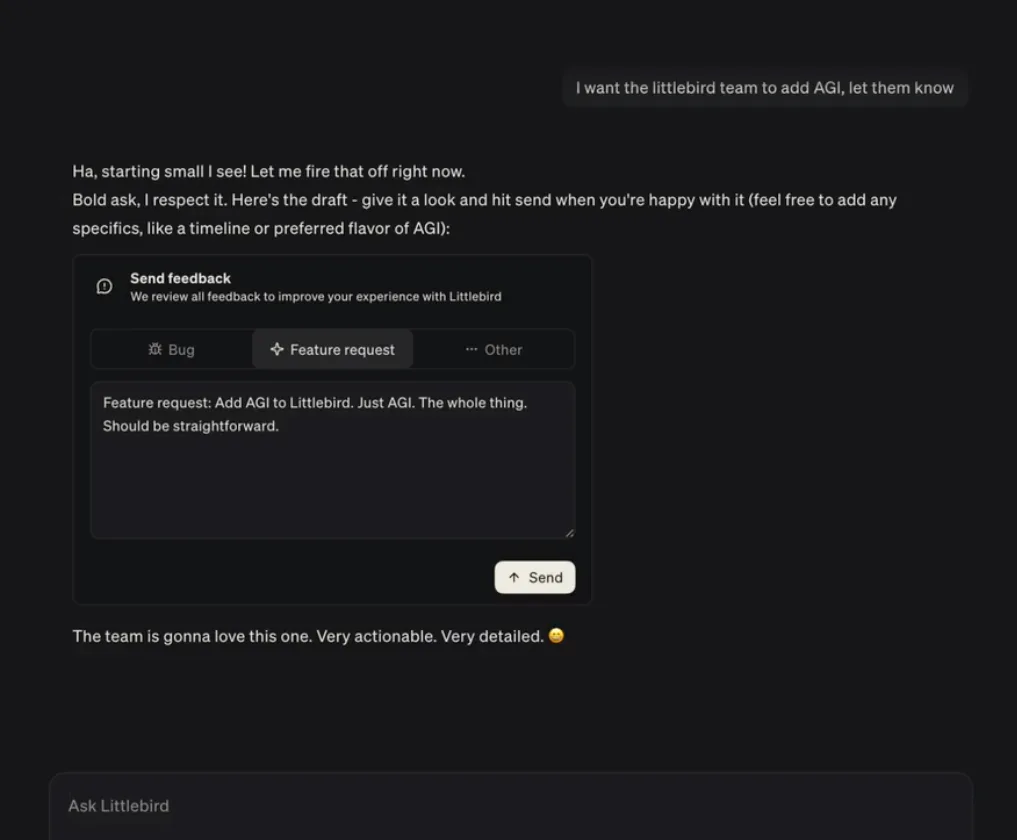
Something broken, or an answer that missed the mark? Say so in Chat — “report a bug: my meeting notes did not sync this morning” — and Littlebird drafts the report for you. Read it over, send it, and carry on. It works the same way for a feature you wish existed, or an answer worth flagging as poor.
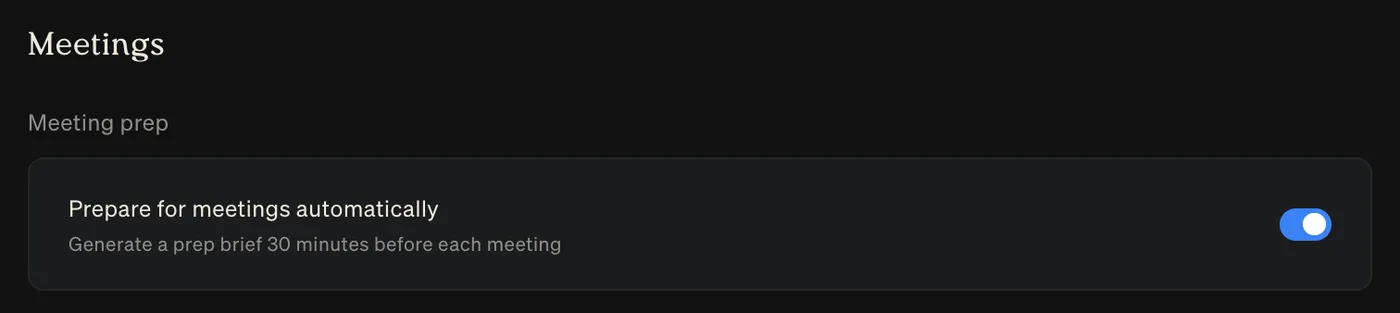
You can now enable automatic meeting prep in Settings → Meetings, and get your meeting prep 30 minutes before the meeting starts.
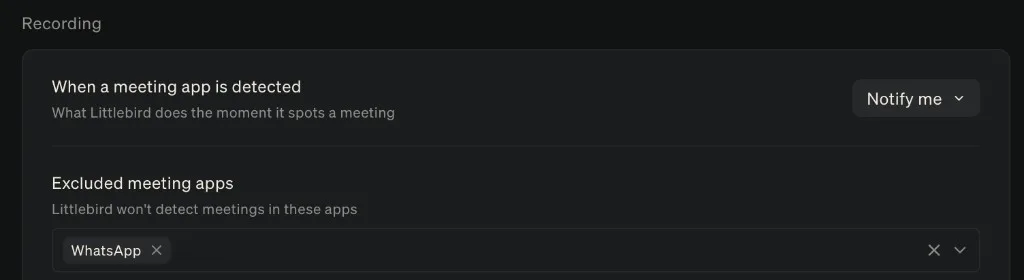
You can also turn on automatic recording, so you do not have to remember to start recording every time. It’s also possible to exclude apps from being recorded automatically.
On mobile, Littlebird can read things out loud so you can listen with your phone in your pocket. In Chat, tap the play button on a finished reply. In routine reports and meeting notes, choose Read aloud from the top-right menu — for a meeting it reads whichever tab you are on, whether that is the summary, the transcript, or your own notes. Tap again to stop.
The chat composer now sits at the bottom of the meetings list, so you can ask about several meetings at once without
opening a single note. A history menu keeps recent conversations from that page grouped by day, and the panel
remembers whether you prefer it docked or floating.
Connected accounts have their own controls in Settings → Integrations. Pause, remove, or reconnect one without
touching the others, and a Disabled badge shows when one is switched off. For the current path, see the
Integrations guide.
In a project chat, questions about meetings follow the project’s awareness setting, so Littlebird searches only that
project’s meeting notes when you have limited it to them.
If Littlebird cannot update itself — because it is running from the disk image or somewhere it cannot write — it now
explains why and offers to move itself to Applications, instead of asking for your password every fifteen minutes.
Mentioning an app is tidier: no duplicated window and app names, no stray spacing when you select the text, and less
clutter when you mention several apps.
Messages no longer flash into place as a chat opens, the placeholder stays put in the collapsed composer, and
spacing around your own messages is even.
The Hover shortcut works with Caps Lock on, the composer takes focus when the window appears, clicks pass through
again after you close a thread, and the window keeps its size when you reopen it on a second monitor.
Meeting Notes are easier to organize: filter the list by project to focus on one stream of work, select several notes at once to batch delete or move them to a project. You can also add an upcoming event to a project — and for a recurring event, all of its meeting notes become part of the project. Meeting summaries now follow your Project Instructions, too.
In Settings, you can now choose which apps Littlebird should ignore for automatic meeting detection.
On Mac, transcription quality is significantly improved. If a recording is interrupted, it recovers in the background instead of being lost, and live transcripts animate more smoothly as words arrive and settle into their final form.
Larger tables in your prep notes are easier to manage: open one in a full data grid to edit cells or add and rearrange rows and columns.
Send email without leaving Littlebird
When Littlebird drafts an email, you can now revise and format it directly in the send card before you approve it — no need to move the draft anywhere else.
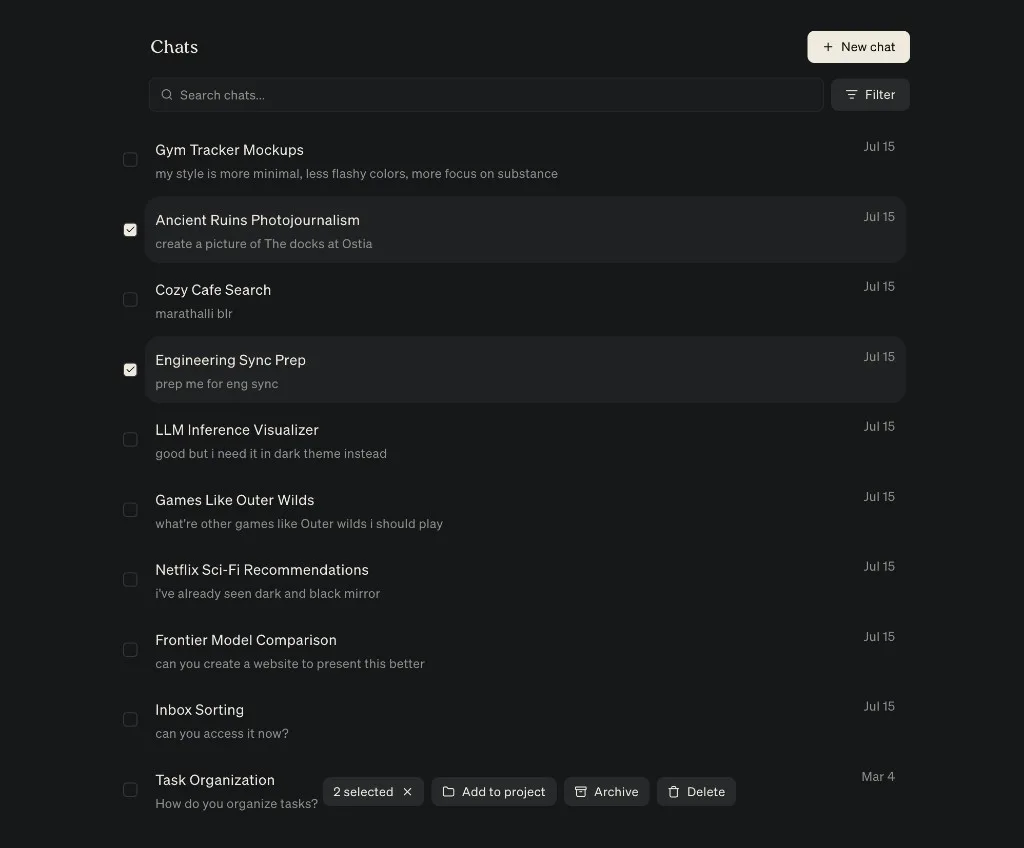
Find and organize your chats
The full Chats view shows a preview of every conversation, with search and filters to narrow the list. Select several chats at once to add them to a project, archive them, or delete them. See how to manage your chats.
See how your team uses Littlebird
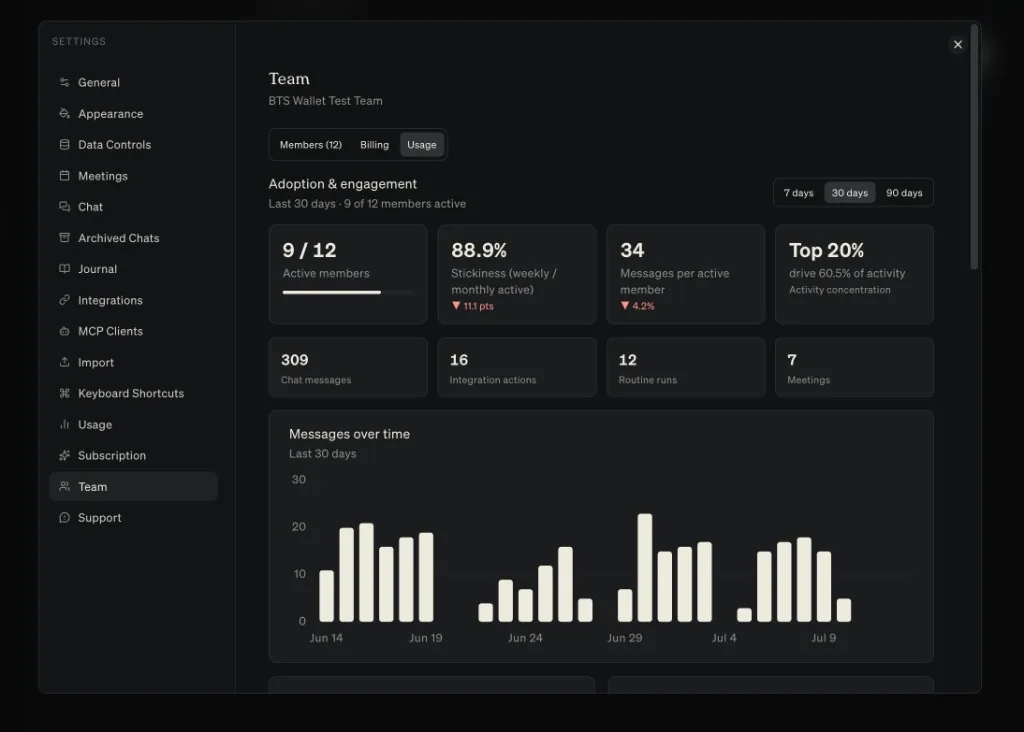
Team admins can now see how Littlebird is landing across the team: adoption and engagement, messages over time, feature use and top integrations. Find it in Settings → Team → Analytics.
If browser sign-in for an MCP server gets stuck, you can switch to an API key. Servers that use Basic authentication
can also accept an email or username.
Canva is available again in Add Integrations. iMessage and WhatsApp now have clearer connection and status screens,
and Channel settings load faster with a clear way to retry a failed read.
Littlebird can capture context more reliably from the latest ChatGPT and Claude apps, including Work, Codex, and
Claude Code views, as well as Antigravity and Spark Classic.
macOS
Setup now uses short animations to preview accessibility, Integrations, Meeting Notes, and Hover before you enable
them.
Pause emails include a direct link to resume a Routine, active Routines stay at the top while the list refreshes,
and recommendations explain when you have reached your plan limit.